



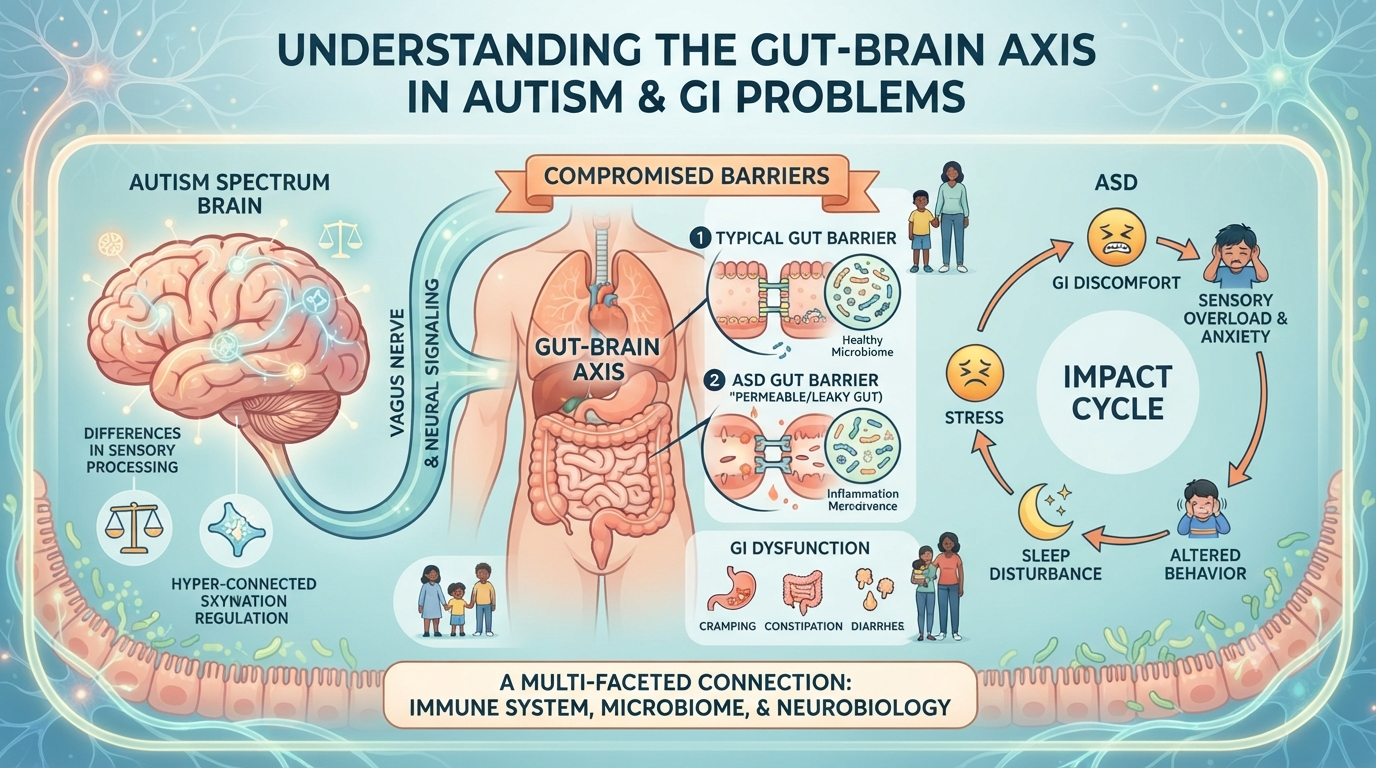
Let’s break this down clearly and scientifically.
🧠 What Is the Gut–Brain Axis?
The gut–brain axis is a two-way communication system between:
- The brain
- The intestines
- The nervous system
- The immune system
- Gut bacteria (microbiome)
Communication happens through:
- The vagus nerve
- Hormones
- Immune signaling
- Neurotransmitters (like serotonin)
Important fact:
👉 Nearly 90% of serotonin is produced in the gut.
So gut health directly influences:
- Mood
- Anxiety
- Behavior
- Sleep
- Pain sensitivity
🔬 Why GI Issues Are More Common in Autism
Research suggests multiple interacting causes — not just one.
1️⃣ Altered Gut Microbiome
Many autistic children show differences in gut bacteria composition.
Possible reasons:
- Early antibiotic exposure
- Limited diet / selective eating
- Immune differences
- Genetic factors
An imbalanced microbiome can lead to:
- Gas
- Constipation
- Inflammation
- Abdominal pain
And inflammation can influence brain signaling.
2️⃣ Nervous System Differences
Autism involves differences in how the nervous system processes signals.
The gut has its own nervous system:
👉 “Enteric nervous system” (sometimes called the second brain).
In some autistic children:
- Gut motility may be slower → constipation
- Pain sensitivity may be altered
- Sensory processing differences affect gut sensations
3️⃣ Sensory Processing Differences
Some children:
- Don’t feel the urge to pass stool
- Avoid toilets due to sensory discomfort
- Restrict food types (texture, smell, color)
This leads to:
- Chronic constipation
- Poor fiber intake
- Nutritional imbalance
4️⃣ Immune System and Inflammation
Some studies show mild immune dysregulation in autism.
Chronic low-grade gut inflammation may contribute to:
- Bloating
- Irregular stools
- Increased gut permeability (still debated scientifically)
5️⃣ Restricted / Repetitive Diet Patterns
Many autistic children eat:
- Very limited variety
- Mostly processed or carbohydrate-heavy foods
Low fiber + low hydration = constipation.
This is often behavioral + sensory driven, not biological alone.
6️⃣ Stress and Anxiety
The gut reacts strongly to stress.
Autistic children often experience:
- High baseline anxiety
- Sensory overload
- Social stress
Stress hormones directly affect:
- Gut motility
- Acid production
- Bowel movement patterns
🧩 Important Clinical Point
GI problems in autism are multifactorial:
It is usually a combination of:
- Neurological differences
- Microbiome variation
- Diet limitations
- Sensory challenges
- Anxiety/stress
Not one single cause.
🚨 Is It Caused By Parenting?
No.
It is a complex neurobiological + physiological interaction.
⚠ What Science Does NOT Fully Confirm Yet
- That autism is caused by gut problems
- That “leaky gut” alone causes autism
- That special diets cure autism
Gut health can improve comfort and behavior, but it does not “cure” autism.
🧠 Why Behavior Worsens When Gut Is Unhealthy
If a child has:
- Constipation
- Gas
- Reflux
- Abdominal pain
They may show:
- Aggression
- Tantrums
- Self-injury
- Sleep problems
Because they may not verbally express discomfort.
🎯 Bottom Line
GI issues in autistic children happen due to:
- Gut–brain signaling differences
- Microbiome imbalance
- Sensory and dietary patterns
- Anxiety/stress effects
- Nervous system regulation differences