



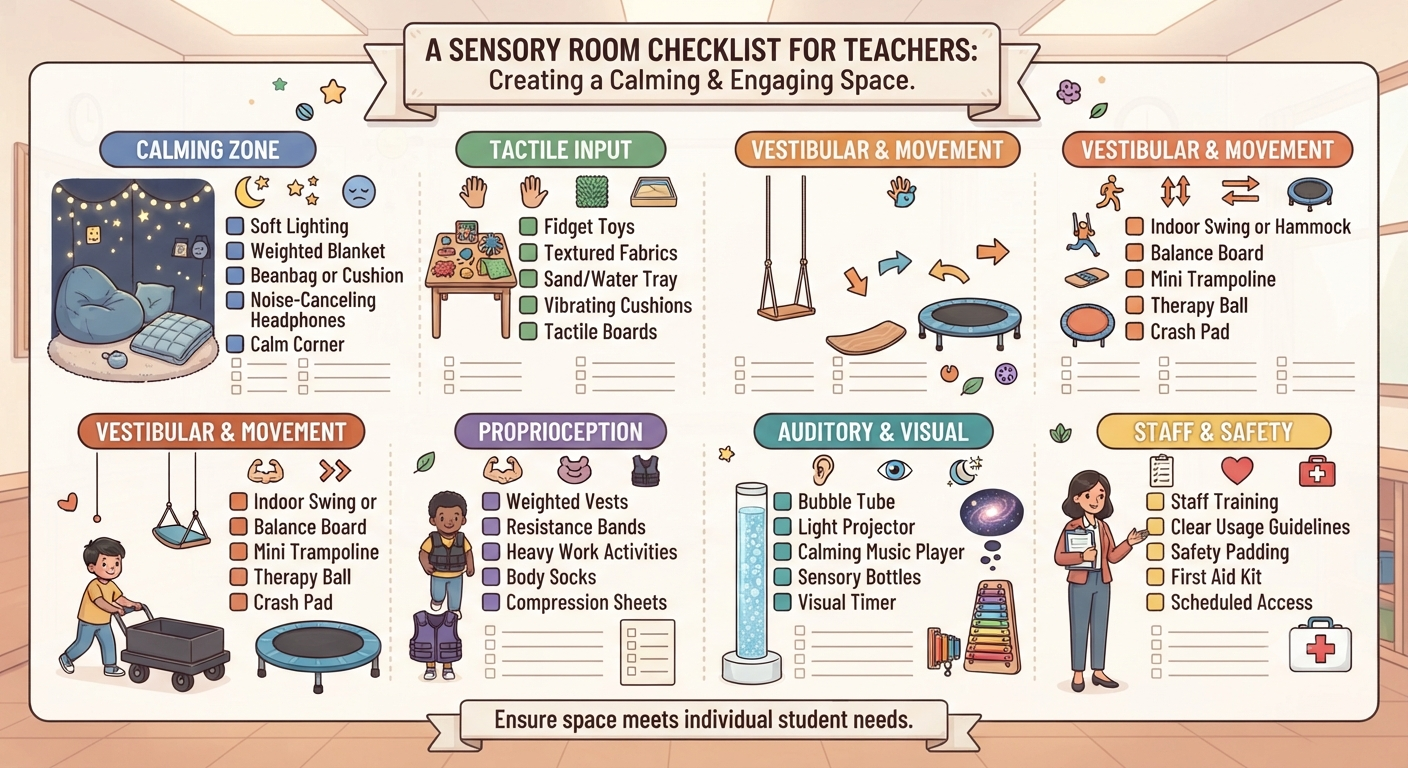
Creating a sensory room is a game-changer for many students, helping them self-regulate so they can get back to learning. For teachers, the key is to balance stimulation (for those who need waking up) and calming (for those who are overwhelmed).
Here is a comprehensive checklist to help you set up and maintain an effective sensory space:
1. The Environment (The Foundation)
Before adding “toys,” ensure the room’s physical atmosphere is controlled.
-
[ ] Adjustable Lighting: Dimmer switches, blackout curtains, or fabric light filters for harsh overhead fluorescents.
-
[ ] Sound Control: A white noise machine, noise-canceling headphones, or soft background music.
-
[ ] Visual Boundaries: Use room dividers or rugs to define “Active” vs. “Quiet” zones.
-
[ ] Wall Colors: Neutral, muted tones (soft blues, greens, or greys) rather than bright, distracting colors.
2. Proprioceptive & Vestibular (Movement)
These items help students understand where their body is in space and burn off energy.
-
[ ] Seating Variety: Bean bags, floor rockers, wobble stools, or therapy balls.
-
[ ] Deep Pressure: Weighted blankets, weighted lap pads, or a “compression swing.”
-
[ ] Active Movement: A mini-trampoline, yoga mats, or a balance board.
-
[ ] The “Crash” Zone: Large floor cushions or foam mats where a student can safely land.
3. Tactile & Visual (The “Senses”)
Tools to keep hands busy and eyes focused on calming movements.
-
[ ] Fidget Kit: A bin containing stress balls, pop-its, infinity cubes, and textured tangles.
-
[ ] Visual Tracking: Bubble tubes, fiber optic lamps, or liquid motion bubblers.
-
[ ] Tactile Wall: Squares of different textures (sequins, artificial grass, soft fur, sandpaper).
-
[ ] Sensory Bins: Containers with kinetic sand, water beads, or dried beans (keep these in the “Active” zone).
4. Self-Regulation & Safety (Teacher Logistics)
A sensory room is only effective if it’s used correctly and safely.
-
[ ] Visual Timer: Essential for setting expectations on how long a student stays in the room.
-
[ ] “How Do I Feel?” Chart: A poster (like the Zones of Regulation) to help students identify their emotions before and after.
-
[ ] Cleaning Log: A daily checklist for sanitizing items, especially tactile toys and shared seating.
-
[ ] Clear Rules Poster: Simple visuals (e.g., “Shoes off,” “One person at a time on the trampoline”).
Comparison of Key Zones
| Zone | Goal | Recommended Items |
| Calming Zone | Lowers arousal | Weighted lap pad, soft music, dim lights, bean bag. |
| Alerting Zone | Increases focus/energy | Trampoline, bright colors, textured wall, balance board. |
| Safe Space | Emotional reset | A small pop-up tent or “nook” where the student can hide. |
Pro-Tip: Start small. You don’t need a massive budget. Often, a corner of a classroom with a rug, a weighted pillow, and a set of noise-canceling headphones is enough to make a massive difference.