



Deep Pressure Joint Input Occupational Therapy – Complete Parent Guide
What is Deep Pressure Joint Input in Occupational Therapy?
Deep pressure joint input occupational therapy uses proprioceptive techniques to provide firm, controlled pressure to children’s joints and muscles. This helps improve body awareness, calm the nervous system, and support sensory regulation-especially for children with sensory processing differences.
Deep pressure joint input occupational therapy is a specialized approach used by pediatric occupational therapists to help children with sensory processing needs. This guide explains what deep pressure and joint input techniques are, how they work, and which activities are safe for home use versus which require professional guidance.
Understanding proprioceptive input and deep pressure strategies can help parents support their child’s sensory regulation, body awareness, and attention at home. However, safety is critical-some techniques require professional training.
📋 Quick Navigation:
What is Proprioception and Deep Pressure?
Proprioception is the body’s sense of position and movement. It tells the brain where joints and muscles are and how much force is being used. This sensory system is crucial for coordination, balance, and motor planning.
Deep pressure and joint input both provide strong proprioceptive input. In children with sensory processing differences, this input can have several beneficial effects:
- Calming the nervous system
- Helping the body feel more organized and grounded
- Improving body awareness in space
- Supporting attention, focus, and emotional regulation
✅ Key Point:Deep pressure joint input occupational therapy techniques work by activating the proprioceptive system through muscles and joints, providing organizing sensory input that can help children feel calmer and more focused.
Understanding Joint Compressions in Occupational Therapy
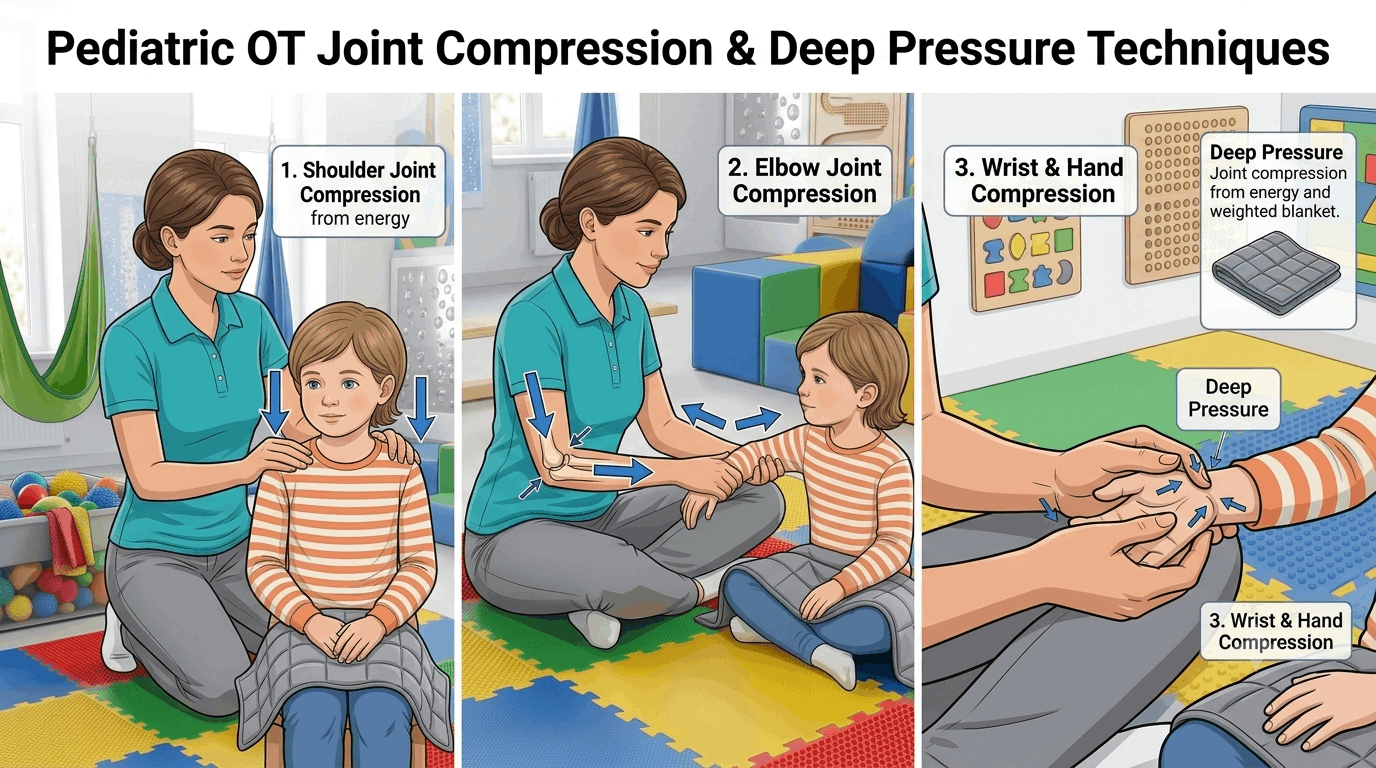
Joint compressions are a specific proprioceptive technique where a therapist applies firm, slow, controlled pressure to a child’s joints. This provides deep sensory input to the proprioceptive system.
Common Joints Used for Compressions
- Wrist
- Elbow
- Shoulder
- Hip
- Knee
- Ankle
Deep Pressure and Joint Input Techniques Overview
| Category | Technique | Benefits | Safety Level | When to Use |
|---|---|---|---|---|
| Joint Compressions | Firm pressure on joints (wrist, elbow, shoulder, etc.) | Body awareness, calming effect | ⚠️ Therapist-guided only | After professional training |
| Bear Hugs | Firm, comfortable hugs (10-20 seconds) | Calming, bonding, proprioceptive input | ✅ Safe at home | When child seeks comfort or is overstimulated |
| Blanket Roll | Rolling child in soft blanket (“burrito”) | Deep pressure, body awareness | ✅ Safe at home | Calming activity, before rest time |
| Heavy Work | Pushing, pulling, carrying, climbing | Strength, coordination, regulation | ✅ Safe at home | Daily activity, high-energy times |
| Deep Pressure Massage | Slow, firm strokes on large muscles | Relaxation, body awareness | ✅ Safe at home | Before bed, during calm time |
⚠️ Important Warning:Multiple reputable sources state that joint compressions should only be used after training from a licensed occupational therapist. Parents should not attempt formal joint compression techniques without professional guidance.
Safe Deep Pressure Activities for Home Use
The following deep pressure joint input occupational therapy activities are generally considered safer for home use when the child is comfortable and basic safety rules are followed:
1. Bear Hugs (Firm, Comfortable)
- Give a firm, comfortable hug for 10-20 seconds
- Ask the child: “Do you want more, or should we stop?”
- Stop immediately if the child pulls away or looks distressed
- Benefit: Provides calming proprioceptive input and emotional connection
2. Blanket Roll or “Burrito” Wrap
- Roll the child gently in a soft blanket
- Keep the head free and ensure breathing is comfortable
- Some children may not like this-never force it
- Benefit: Deep pressure across the body, helps with body awareness
3. Pillow or Cushion “Sandwich”
- Place the child between pillows or cushions
- Apply gentle, even pressure for 5-10 seconds
- Observe the child’s response closely
- Benefit: Calming deep pressure, easy to control intensity
4. Deep Pressure Massage (General)
- Use slow, firm strokes from shoulders down arms and hips down legs
- Use the palm of the hand, not fingertips
- Avoid strong pressure directly over joints or bones
- Benefit: Relaxation, improved body awareness, bonding
5. Heavy Work Activities (Natural Deep Pressure)
These are often the safest and most effective ways to provide proprioceptive input at home:
- Wall push-ups: Stand arm’s length from wall, push body away
- Chair push-ups: Lift body from seated position using arms
- Carrying groceries: Age-appropriate weight in each hand
- Animal walks: Bear walk, crab walk, frog jumps
- Pushing/pulling: Laundry basket, heavy boxes, toy cart
- Wheelbarrow walks: Hold child’s legs while they walk on hands (with care)
- Yoga poses: Downward dog, child’s pose, plank
💡 Pro Tip:Heavy work activities provide natural proprioceptive input through muscles and joints. They’re safe, effective, and can be incorporated into daily routines-making them ideal for home use in deep pressure joint input occupational therapy programs.
Critical Safety Rules for Deep Pressure and Joint Input
When to Avoid or Seek Professional Advice First
- Joints are painful, swollen, inflamed, or recently injured
- Skin is broken, has a rash, or shows signs of infection
- Child has brittle bones, bone disease, joint subluxation, or connective tissue disorder
- Child is clearly uncomfortable, cries, or stiffens their body
- Recent surgery or medical condition that could make pressure unsafe
Basic Principles for Safe Application
- Use the palm, not fingertips: Fingertips can cause bruising or tissue damage
- Firm but comfortable: Pressure should never cause pain, redness, or bruising
- Neutral joint position: Keep joints comfortable, not overly bent or awkward
- Slow and rhythmic: Avoid quick, jerky movements
- Child’s consent: Always offer choice: “Do you like this? More or stop?”
Watch the Child’s Response
Stop immediately if:
- Child becomes more agitated, restless, or distressed
- Pain, discomfort, or unusual movements appear
- Marked redness or marks on the skin
- Child asks to stop or shows non-verbal signs of discomfort
What’s Safe at Home vs. What Needs Professional Guidance
📊 Quick Reference:
- ✅ Generally Safe at Home: Bear hugs, blanket rolls, pillow squeezes, deep pressure massage on large muscles, heavy work activities
- ⚠️ Therapist-Guided Only: Formal joint compressions, repeated joint-focused pressure, weighted blankets/vests (especially during sleep)
📚 Related Resources on limitlesslearner.in
🔗 Trusted External Resources:
Frequently Asked Questions (FAQ)
Deep pressure joint input occupational therapy refers to proprioceptive techniques that provide firm, controlled pressure to a child’s joints and muscles. This helps improve body awareness, calm the nervous system, and support sensory regulation in children with processing differences.
No, joint compressions should only be performed after training from a licensed occupational therapist. Parents can safely use general deep pressure activities like bear hugs, blanket rolls, and heavy work exercises, but formal joint compression techniques require professional guidance to ensure safety and effectiveness.
Proprioceptive input helps children develop better body awareness, improves attention and focus, provides calming effects, supports emotional regulation, and enhances coordination and motor planning skills. It’s especially beneficial for children with sensory processing differences.
Safe heavy work activities include wall push-ups, chair push-ups, carrying groceries, animal walks (bear walk, crab walk, frog jumps), pushing or pulling heavy boxes, wheelbarrow walks (with supervision), and yoga poses like downward dog or child’s pose. These provide natural proprioceptive input through muscles and joints.
Consult an OT if your child shows extreme sensitivity to touch or movement, has difficulty with coordination and balance, struggles with emotional regulation, or if you’re unsure which sensory strategies are appropriate. A professional assessment ensures safe and effective intervention.
🎯 Final Takeaway:Deep pressure joint input occupational therapy can be a valuable tool for supporting children with sensory processing needs. While general deep pressure activities (bear hugs, heavy work, blanket rolls) are safe for home use, formal joint compression techniques require professional training. Always prioritize your child’s comfort, consent, and safety-and consult a licensed occupational therapist for personalized guidance.