



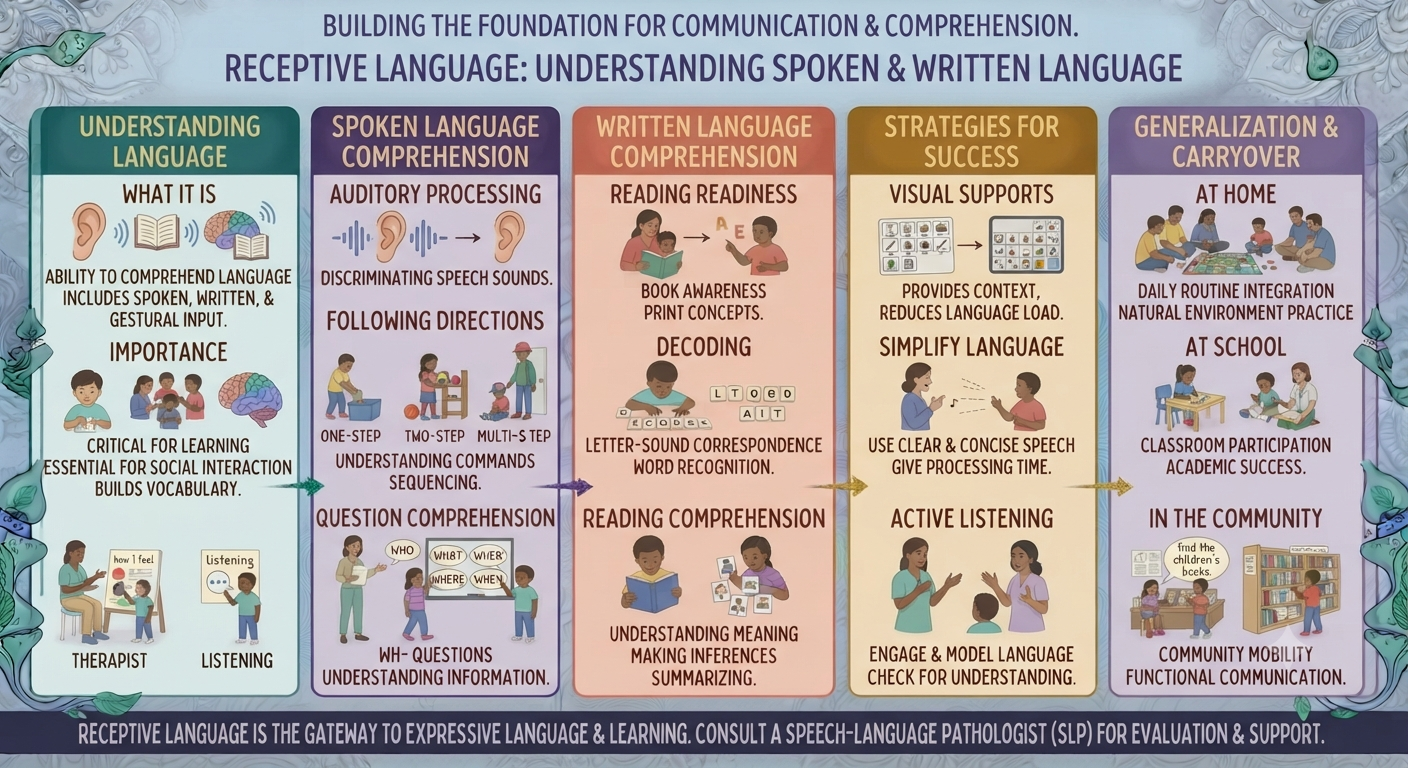
Receptive Language (Understanding Language)
Definition:
Receptive language is a child’s ability to understand words, sentences, and instructions.
Simply: “What the child understands before they speak.”
-
Example: If you say, “Give me the ball,” and the child does it, their receptive language is working.
1. Why it’s important
-
Children cannot express what they don’t understand
-
Strong receptive skills → easier expressive language development
-
Helps in learning, social interaction, and following instructions
⚠️ A child can have good speech sounds but poor understanding → may appear “talkative but not comprehending.”
2. Signs of Receptive Language Delay
-
Does not respond to name
-
Cannot follow simple instructions (“Come here,” “Sit down”)
-
Appears unaware of surroundings or people talking
-
Limited understanding of words, gestures, or routines
-
Needs repeated prompts or physical guidance to do tasks
3. How Speech Therapy Works on Receptive Language
A. Auditory Comprehension Activities
-
Start with single-step commands:
-
“Pick up the ball” → child picks ball
-
-
Move to two-step instructions:
-
“Pick up the ball and give it to me”
-
-
Gradually increase complexity (three-step commands, descriptive language)
B. Object and Picture Recognition
-
Show pictures / toys and ask child to identify:
-
“Where is the cat?” → point
-
“Give me the red car” → child follows
-
C. Following Routines
-
During daily activities:
-
Bath time: “Take off your socks”
-
Meal time: “Put the spoon on the table”
-
-
Teaches language in context
D. Gestures and Visual Cues
-
Use pointing, showing objects, or signs along with words
-
Supports understanding before verbal output
E. Listening Games
-
Peek-a-boo: Teaches turn-taking + attention to voice
-
“Simon Says” game: Follow instructions, improves comprehension
-
Musical instructions: “Clap hands,” “Jump,” “Touch nose”
4. Parent Tips for Home Practice
-
Talk slowly and clearly
-
Use one instruction at a time
-
Repeat consistently in routines
-
Pair words with objects/actions
-
Use positive reinforcement for following instructions
Example: “Take spoon” → child does it → clap / praise
5. Progress in Receptive Language
-
0–6 months: Responds to sounds and voices
-
6–12 months: Understands simple words like “no,” “bye-bye”
-
12–18 months: Follows 1-step instructions
-
18–24 months: Follows 2-step instructions
-
2–3 years: Follows 3-step instructions, understands “big/small” or “in/on”
-
3+ years: Understands simple stories, questions, and explanations
6. One-line Summary
Receptive language is about understanding words and instructions, and speech therapy builds this through listening, responding, and connecting words to actions.
[…] Understand language (receptive language) […]