



What Are Environmental Factors in Speech and Language Development?
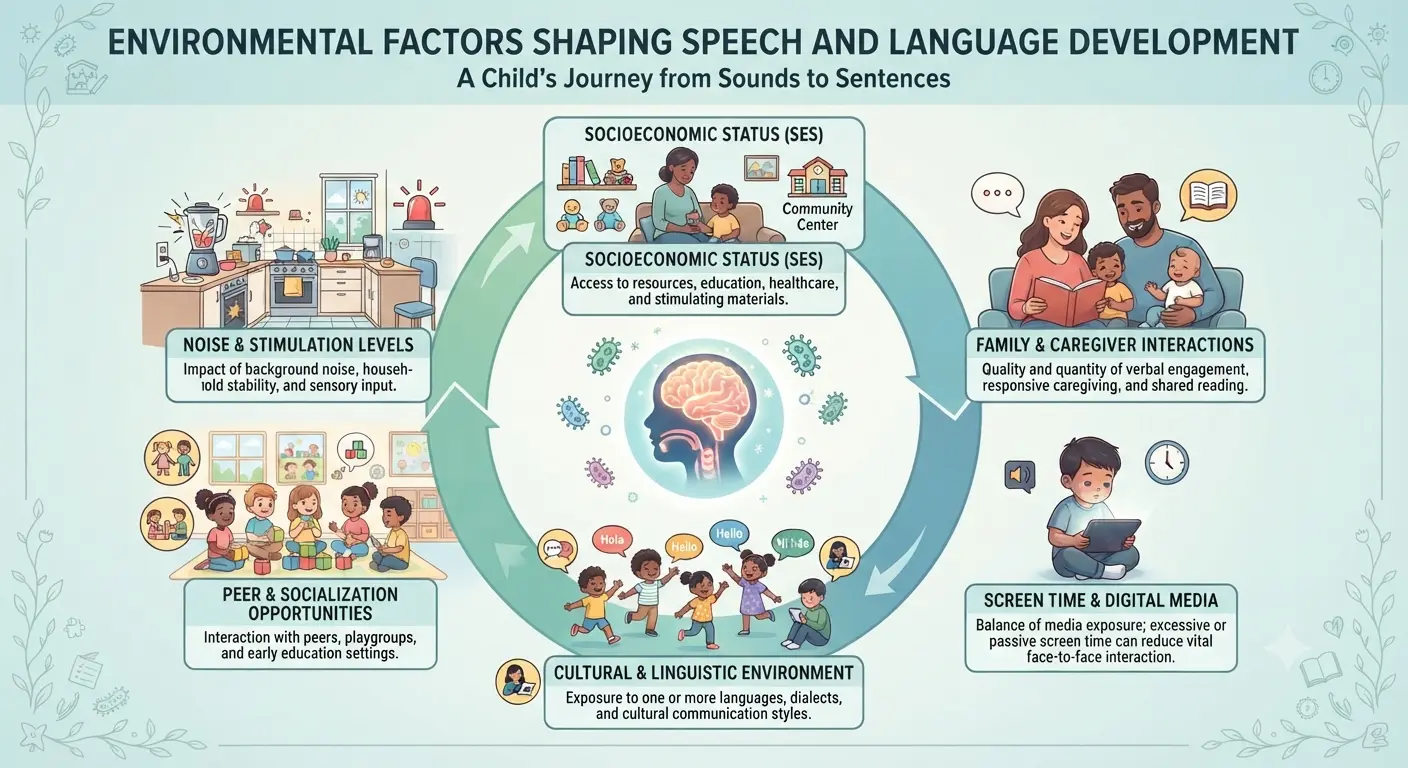
Environmental factors in speech and language development refer to the external conditions—such as parental verbal engagement, daily exposure to reading, home language richness, screen time limits, and peer socialization—that directly influence a child’s vocabulary growth, comprehension, and expressive communication abilities.
💡 Key Clinical Insight: Research shows that a language-rich environment during the first 36 months of life permanently strengthens neural pathways responsible for auditory processing, social pragmatics, and articulation skills.
Key Environmental Factors in Speech and Language Development
Every interaction a child experiences acts as a building block for their communication architecture. From passive background sounds to active two-way conversations, environmental stimulation dictates the speed and clarity of language acquisition.
Overview: Environmental Factors & Their Impact
| Environmental Factor | Impact on Speech Development | Recommended Intervention |
|---|---|---|
| 1. Verbal Interactions | Accelerates vocabulary retention and sentence structuring. | Engage in active dialogs, describe routine activities, and ask open-ended questions. |
| 2. Shared Reading | Enhances phonological awareness, comprehension, and word recognition. | Read daily using picture books; point to and name unfamiliar objects. |
| 3. Screen Time & Digital Media | Excessive passive viewing can lead to delays in expressive speech and social cues. | Limit passive screen time; prioritize face-to-face play and human interaction. |
| 4. Social Peer Exposure | Teaches turn-taking, eye contact, and pragmatic language rules. | Arrange structured playdates and interactive group activities. |
Role of Home Environment and External Standards
Creating a speech-supportive home environment requires conscious effort. According to clinical guidelines established by the American Speech-Language-Hearing Association (ASHA), early childhood environments should prioritize responsive caregiving where adults listen, wait, and respond to a child’s communicative attempts.
Furthermore, understanding the biological and cognitive foundations of speech is vital. As outlined in the 7 Systems of Communication Architecture, environmental inputs directly feed into the linguistic encoding and pragmatics stages of human expression.
If you are noticing developmental delays or behavioral challenges alongside speech difficulty, exploring our resources on Speech Therapy Interventions and Sensory Integration Techniques can provide tailored support strategies.
Environmental Factors Affecting Speech Development
1. Family Communication Environment
The way family members communicate with the child plays a major role in speech development.
Positive Environment
- Parents talk frequently with the child
- Storytelling and conversations occur daily
- Adults respond to the child’s vocalizations
Negative Environment
- Limited conversation at home
- Children are not encouraged to speak
- Adults speak for the child all the time
Impact: Children exposed to rich communication environments develop stronger vocabulary and clearer speech.
2. Screen Exposure
Excessive use of screens such as:
- television
- mobile phones
- tablets
can reduce opportunities for real interaction and conversation. Research shows that children who spend long hours on screens may show delayed speech development because communication is one-way instead of interactive.
3. Social Interaction Opportunities
Children learn speech by interacting with:
- parents
- siblings
- peers
- teachers
Limited social interaction can delay speech development.
Example: Children who rarely interact with other children may have fewer opportunities to practice communication.
4. Language Stimulation at Home
Language-rich activities support speech development.
Examples:
- reading books
- singing songs
- playing interactive games
- asking questions
These activities encourage children to use words and sentences.
5. Bilingual or Multilingual Environment
Growing up in a bilingual environment does not cause speech delay, but it may temporarily slow early language development because the child is learning multiple language systems.
However, in the long term, bilingual children often develop strong cognitive and communication skills.
6. Emotional Environment
A supportive emotional environment is essential.
Children who experience:
- stress
- neglect
- fear
- limited emotional support
may show delays in communication development.
A safe and nurturing environment encourages children to express themselves freely.
7. Educational Environment
Preschool and early education environments influence speech development through:
- teacher interaction
- group activities
- storytelling sessions
- language-based learning
Children exposed to stimulating educational environments often show faster language development.
8. Socioeconomic Conditions
Access to resources such as:
- books
- educational toys
- therapy services
can affect speech development.
However, responsive communication from caregivers is more important than expensive resources.
9. Cultural Communication Patterns
Different cultures have different ways of interacting with children.
Some cultures encourage children to speak frequently, while others emphasize listening first.
These differences can influence how and when speech develops.
10. Exposure to Speech Models
Children learn speech by imitating adults and peers. If a child frequently hears clear speech, they are more likely to develop clear pronunciation. Limited exposure to good speech models may affect articulation development.
Children Who May Be More Sensitive to Environmental Factors
Environmental factors may have a stronger effect on children with developmental conditions such as:
- Autism spectrum disorder
- Developmental Language Disorder
- Attention Deficit Hyperactivity Disorder
These children often require structured language stimulation.
How to Improve the Speech Environment for Children
Parents and teachers can support speech development by:
- talking frequently with the child
- asking open-ended questions
- reading books daily
- encouraging storytelling
- reducing screen time
- engaging in play-based conversations
- responding to the child’s attempts to communicate
Conclusion
Environmental factors play a major role in speech and language development. A stimulating, interactive, and supportive environment helps children develop strong communication skills.
Frequently Asked Questions
What are the primary environmental factors affecting speech and language development?
The primary environmental factors include parent-child verbal communication, daily exposure to books and reading, screen time management, socioeconomic resources, and opportunities for social interaction with peers.
How does screen time affect early speech acquisition?
Excessive passive screen time reduces real-time, two-way verbal interactions between adults and children. This reduction in interactive conversation can lead to lower vocabulary retention, delayed expressive language, and reduced conversational practice.
Can an enriched home environment fix speech delays?
An enriched home environment provides essential support and can accelerate progress, but if a child has an underlying medical or neurodevelopmental delay, environmental adjustments should be paired with professional assessment from a certified speech therapist.
How do social interactions promote pragmatic language skills?
Peer interactions teach children real-world conversational rules—such as waiting for their turn to speak, maintaining eye contact, interpreting non-verbal gestures, and staying focused on a shared topic (joint attention).
[…] learn more about environmental impacts on child speech, read our detailed guide on Speech And Language Development – Environmental Factors or explore our specialized Speech Therapy […]